


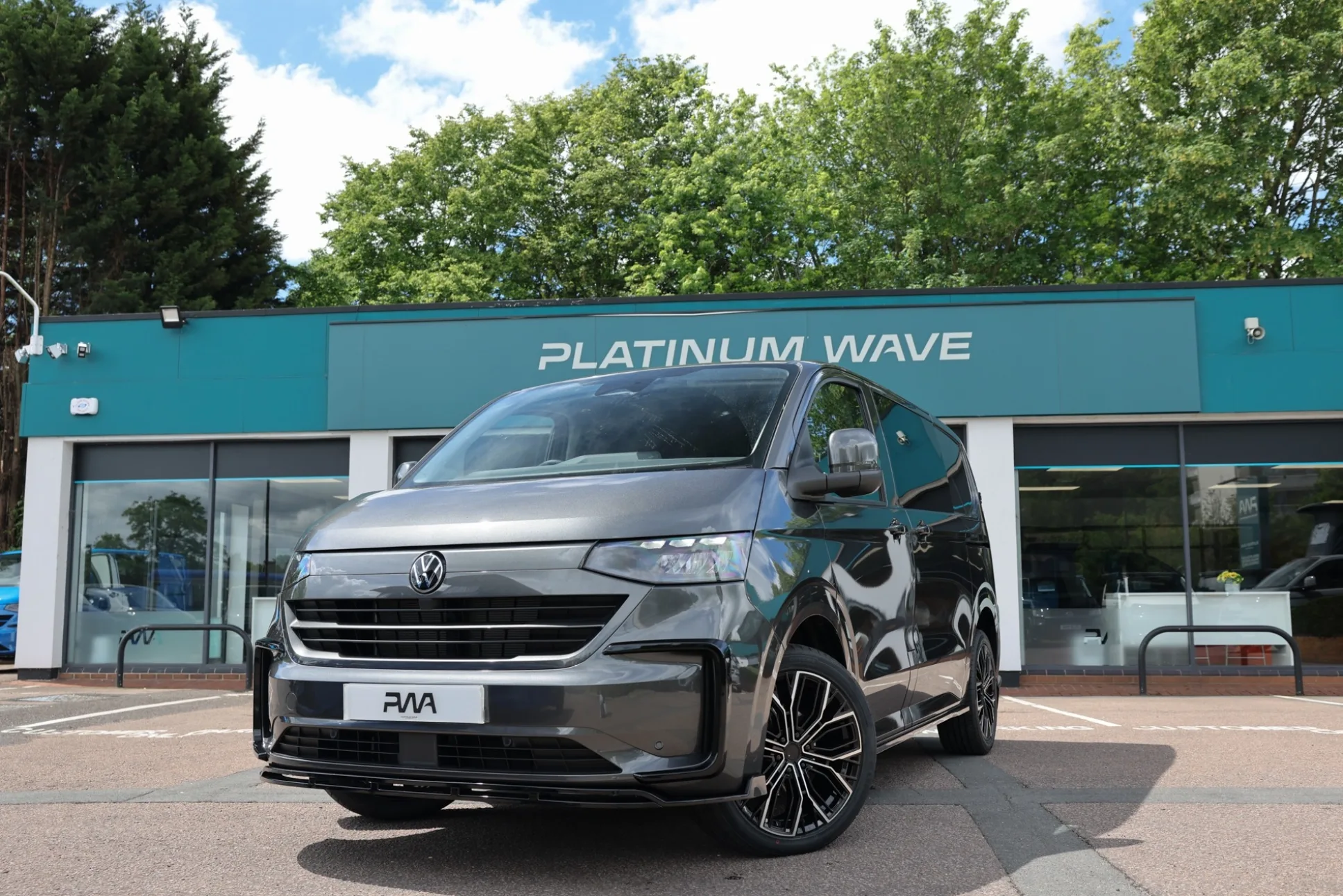
The VW Kombi, originally known as the Type 2, is a design classic. It was first introduced in the 1950s, utilising the Beetle’s air-cooled, rear-engine platform to create a versatile “combined use” vehicle.
The style quickly became a symbol of 1960s counterculture, freedom and surf culture, particularly in the USA. Nowadays, it’s a firm favourite as both a commercial work van and as a versatile leisure vehicle.
Fast forward to today, and the Kombi van (or Combi van) is more commonly associated with the modern crew van. Popular models include the Ford Transit Crew Cab and the VW T7 Kombi. The style is instantly recognisable, offering ample space for both passengers and cargo.
If you’re thinking about choosing a Kombi/Combi van for your business, we have some helpful tips to help make shopping a breeze. We’ll explore everything you need to know about this vehicle type, what to look for when buying a used van, and how to make sure you stay compliant if you’re planning to use your work vehicle as your personal vehicle.
In this post we’ll explore:
- Why You Should Choose a Kombi
- Step 1: Defining Your Specs – New, Used or Electric?
- Step 2: The Pre-Purchase Inspection Checklist
- Step 3: Paperwork and Ownership Documents
- Step 4: Making the Purchase and Pos
Why Choose a Kombi?
Kombi vans are versatile and reliable vehicles, offering car-like handling, practical design features and excellent fuel efficiency. It’s a mid-sized vehicle that offers the perfect proportions for a crew van, without compromising on load space.
Comparing the Kombi, Panel Van, and Caravelle
These three vehicle categories serve very different purposes. A panel van typically has 2-3 seats and a large cargo space, while the kombi offers a middle ground between a passenger vehicle and a cargo van. The Caravelle is a luxury MPV vehicle, offering high-end features and a more premium experience for the passengers.
If you’re looking for a flexible work van with ample seating and impressive load space, then a Kombi van is the right choice for you.
Read more: VW Transporter Kombi vs Ford Transit Custom Double Cab-in-Van
SWB vs. LWB: Which Wheelbase Fits Your Life?
The wheelbase refers to the distance from the centre of the front wheels to the centre of the rear wheels.
A short wheelbase offers less internal space but a more agile driving experience. For commercial vehicles navigating city streets, this can be a blessing, particularly when it comes to fitting into a tight parking space.
A long wheelbase allows you to maximise the internal space, but you lose some of the manoeuvrability and you might find it more difficult to fit in a standard sized parking bay.
The right one for you will really depend on how you plan to use the van. If the van will double as your everyday vehicle, then a short wheelbase will provide a more car-like driving experience. For more cargo space, opt for a long wheelbase vehicle. We recently shared our insight into the short wheel base versus long wheel base debate.
Step 1: Defining Your Specs – New, Used or Electric?
If you’ve made the decision to buy a Kombi van, the first question will be about your budget and how much you are willing to spend. You’ll also need to consider the short term and long term costs of your van choice.
The primary choice you’ll need to make about your van specification will be between a new, used or electric vehicle. Choosing electric is a great way to future-proof your purchase – particularly if you’ll be using it for your business – but it might not be the most practical choice for a commercial vehicle if you cannot guarantee access to charging points.
Buying new can offer maintenance savings in the short term, but you’ll naturally pay more upfront, and you might also have to pay more in insurance. Buying used can offer greater flexibility, provided you know what to look for under the bonnet.
Thankfully, the VW Kombi and Ford Crew Cabs are known for being a reliable vehicle with car-like engineering for both durability and passenger comfort. Therefore saving money with a used vehicle can often be the best way to achieve your business goals without breaking the bank.
Step 2: The Pre-Purchase Inspection Checklist
Before you sign on the dotted line for any vehicle, it’s important to look beyond the aesthetics to get a complete picture of what is going on below the surface. A few simple pre-purchase inspection tips could help you to avoid purchasing a lemon.
What to Listen for Under the Bonnet
You ideally want to listen to the engine following a cold start, as this will give you the best impression of the vehicle’s true condition. Listen out for any loud metallic noises, high-friction sounds and irregular rhythms. The VW Kombi’s most common issues include: ERG valve failures, DPF blockages, Dual-mass flywheel/clutch wear and water pump leaks leading to low coolant levels.
For complete confidence in your purchase, we recommend buying from a trusted dealer. This will ensure your vehicle has gone through multi-point checks, so any of the issues above will be flagged and addressed.
How is the Bodywork and is There any Rust?
Rust can signal serious structural issues with the vehicle, so it’s vital to inspect the bodywork not only for signs of rust but also for signs that it has been covered up. It can also signal that a vehicle hasn’t been well maintained, which could set alarm bells ringing for a used vehicle.
Make Sure to Test the Quick-Release Seating
When vehicles have undergone conversion work, you want to feel confident that the van is still as safe as when it was originally sold. Conversion work should always be carried out by a reputable company, ideally with whole vehicle type approval.
This will ensure that key safety features, like seating and seatbelts, are securely installed and fit for use.
Testing things like quick-release seating for signs of movement in the tracks can help you to feel confident in the safety of the vehicle.
Step 3: Paperwork and Ownership Documents
A vehicle with no traceable history could be hiding a range of issues and might even turn out to be stolen. Theft of crew vans remains a widespread issue, so buyers need to be alert. Paying close attention to the paperwork can also reveal how well the vehicle has been maintained and how it has been put to use.
Service History and Cam Belt Intervals
The service history will reveal how the Kombi van has been maintained, and you should pay close attention to the cam belt change intervals. Common advice is to change the cam belt every 4-5 years, or every 60,000 to 80,000 miles, whichever comes first.
There should also be clear and consistent mileage records without any gaps. A gap in the service record could indicate that the vehicle was off the road for a long time, or that upkeep has been neglected.
V5C and Insurance: Commercial vs. Private Use
The V5C, otherwise known as the vehicle logbook, is an official DVLA document that recognises the official keeper of a vehicle, but not necessarily the owner. This is an essential document for buying or selling a vehicle. This will have to be transferred to you after purchase.
When it comes to insuring your vehicle, it’s not the vehicle type that will determine if it is designated as commercial or private use, but rather how the vehicle is used. If you use a privately-insured vehicle for business use, this can invalidate your insurance policy, so it’s essential to ensure that you have the correct coverage.
Step 4: Making the Purchase and Post-Buy Essentials
Once you have settled on your vehicle, the work isn’t over yet. There are some final bits of admin to complete before you can get your vehicle on the road. First, you’ll need to make sure the seller has notified the DVLA of the purchase. You’ll receive a new V5C (logbook), usually within 4-5 days.
You’ll also need to tax your vehicle, as tax no longer carries over with the sale. You’ll need to arrange the correct insurance for your vehicle usage. It’s a good idea to keep all of your documents in one place so you have everything to hand if you decide to sell your vehicle at a later date.
Our commitment to aftersales service will ensure you have support every step of the way, so you can feel confident in your purchase. We also offer commercial vehicle upgrades to ensure it’s able to meet your requirements now, and in the future.
The Ultimate Dual-Purpose Vehicle
Finding your next client, job, or opportunity starts with finding the right commercial van. If you’re looking to buy a Kombi van, browse our stock of quality crew vehicles, or get in touch with our team if you’re looking for further guidance.
We stock a wide range of new and used vehicles, including automatic and manual transmission. You’ll find a wide range of convenient features to help bring your business plans to life.
As the name suggests, the Kombi van is the ideal combination of passenger vehicle and cargo vehicle, with optional extras available to further customise the vehicle to your requirements. Whatever you have planned for your Kombi van, we can help to match you with the ideal vehicle for your needs.
Approved by: William Boyle
Managing Director, Platinum Wave Automotive
Published: 17th June 2026