


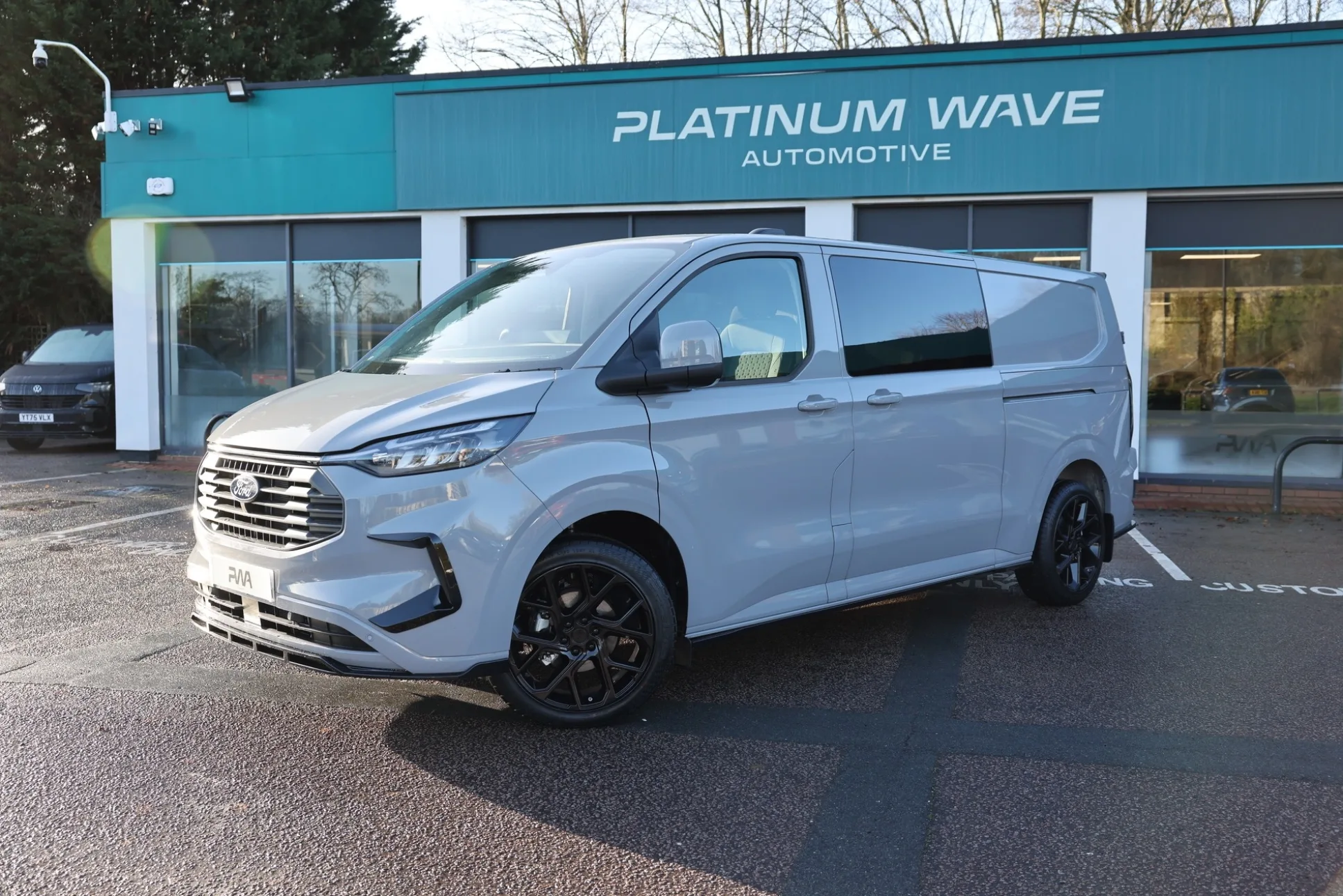
Choosing the ideal commercial van for your business is not a decision to take lightly. You’re going to rely on this vehicle every day, and you need to feel confident that it has the features and capacity to help drive your business forward.
Two of the most popular commercial vans are the VW Kombi Transporter and the Ford Transit Custom Double Cab-In Van. While they might look similar, with five to six belted seats and a similar cargo area, there are some key differences that buyers should be aware of.
To avoid overwhelming you with facts and stats, we’ve put together this short guide that will outline everything you need to know about each vehicle. Armed with this information, you can make an informed choice that will ensure your commercial vehicle is always up to the task ahead.
VW Kombi Transporter
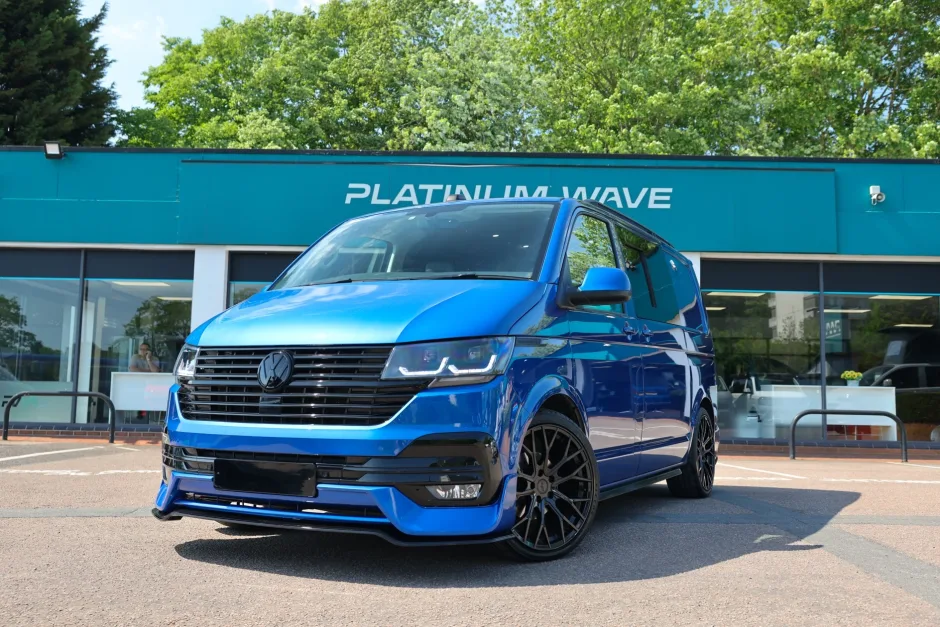
First up is the VW Kombi Transporter, which is a versatile crew van that promises to bridge the gap between a commercial vehicle and passenger comfort. It offers a car-like experience, both for the driver and passengers.
The VW Transporter is a design icon, which explains its obvious appeal. This van not only performs well, but it also looks the part. The interior is known for its premium feel, with the option to customise the upholstery to fit your brand.
This van is also incredibly flexible. It offers seating for five to six passengers, and the second-row bench can tumble forward or be removed entirely to make more space when required. So if you’re transporting equipment one day and clients the next day, you’ll always have the space.
Take a look around one of our VW T7 Kombis:
Ford Transit Custom Double Cab-in-Van
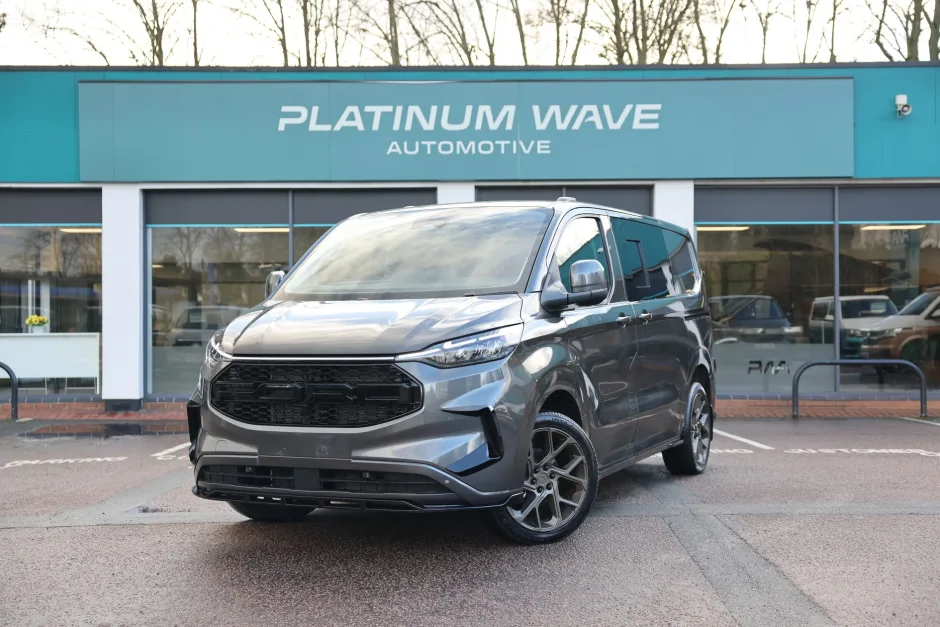
Next up, we have the Ford Transit Custom Double Cab-in-Van. Ford is renowned for reliability and versatility, and this Transit Custom Double Cab-in Van is no different.
It’s currently the most popular van on UK roads, and with good reason. It’s known for its balance of practicality, comfort and excellent resale value.
It features two or three seats upfront, and then a second row of seats for three additional passengers. The fixed bulkhead offers separation from the rear loadspace.
Like the VW Kombi, the Ford Transit also offers a car-like driving experience. The driver enjoys a 4-way adjustable heated seat, with lumbar support and adjustable armrests to take the sting out of longer trips.
Take a look at one of our Ford Kombis:
Transporter Kombi vs Transit Custom: What’s the Difference?
These vehicles are often cross-shopped because they sit in the same mid-size van and crew van category, but they feel quite different in design and philosophy once you dig a little deeper.
The Transporter Kombi is often seen as the more laid back and flexible choice, while the Transit Custom is a more “work-first” van. The Kombi is designed to carry passengers and some cargo, while the fixed bulkhead of the Transit Custom creates a more functional feel.
Both offer strong resale value thanks to their solid builds and reputations. The Transit Custom in particular offers easy servicing thanks to its enduring popularity.
Are you thinking about buying a new Kombi? Our Managing Director William Boyle compares the new T7 and new Ford:
Read more: Our Guide to the Best Dual-Purpose Van for Sole Traders
The Aesthetic Appeal
The Transporter Kombi often wins on looks for the people who care most about design. It’s quietly stylish without being flashy, with an almost Scandinavian-style utilitarian aesthetic. This model is also a popular choice as a leisure vehicle, which makes it a popular crossover option for those who are looking for a work van they can also ferry the family around in.
This is not to say that the Transit Custom doesn’t have its own aesthetic appeal. The latest models have shown considerable growth in terms of design, with a more SUV-like front end and strong horizontal lines. It might be more utilitarian, but some people love this confident and industrial look.
Interior Comfort, Tech and Cabin Layout
The interior is arguably more important than the exterior for those who will actually be using this in their working day. As mentioned above, the VW Transporter offers a more car-like driving experience. It offers an excellent driving position, with an uncluttered dashboard made from robust and premium-feeling materials. The seats are also famously comfortable, even on longer drives.
The interior of the Ford Transit Custom is more comparable to an SUV in the most recent models. It offers a modern dashboard with excellent integration of navigation and connectivity features. There are also lots of clever storage solutions, ensuring the driver cab remains tidy, even when there are multiple people using the vehicle.
Practicality and Load Space
By squeezing in the extra row of seats, we naturally lose a bit of the load space, but this is a key compromise of this vehicle type. This vehicle type is best suited to those who often need to transport teams and crew, along with some equipment. It also allows business owners to practically use their work van as a personal vehicle.
The Ford Transit Custom will generally offer more load space, with a wider space between the wheel arches. That said, the Kombi offers the option to remove the second row of seats entirely, which essentially turns it into a full panel van.
If the load space is your primary concern, we can help you to find a model that offers the maximum payload with the five seat configuration, as there will be differences between individual models.
Engines, Performance and Driving Dynamics
Both the VW and the Ford have traditionally been powered by a 2.0 litre diesel engine. There is the option to choose a higher-output version for towing, motorway driving and carrying heavier loads.
We’re also seeing the rise of more hybrid and fully electric options as companies look for ways to lower costs, reduce their carbon footprint and work around London’s ULEZ regulations.
Overall, the two vehicles are very similar in terms of engines and performance. In terms of driving dynamics, both offer a car-like driving experience, with the Transporter offering a slight edge in this respect. While the Transit may have once been quite commercial and utilitarian in driving style, more recent models have been updated to offer a more engaged driving experience.
How Does Price, Depreciation and Reliability Compare?
In terms of upfront costs, the Transit tends to be the more affordable option, which is great for companies looking to build a fleet of reliable vehicles without stretching the budget too far. The VW Transporter tends to carry a slightly more premium price tag, likely because of demand from the conversion market and due to brand perception.
In terms of resale value, while the VW Transporter might cost more upfront, it tends to hold its value well. The Transit does offer good resale value, the depreciation is likely to be steeper over the same ownership period.
Both offer excellent reliability, but the popularity and prevalence of the Ford Transit gives it a slight edge as you can be confident that maintenance will be easy enough. With the VW Transporter, expect repairs and parts to be more expensive due to the premium quality, but these parts are likely to be longer-lasting.
Verdict: Which One Should You Buy?
Your final decision should always come after you have explored each vehicle in detail and taken each for a test drive. For some, it’s a purely practical decision based on their budget and requirements. And for others, it’s a more emotional decision based on brand perception or driving experience.
At Platinum Wave Automotive, we can support business owners looking for a single vehicle or a whole fleet of vehicles. We don’t just offer commercial vehicles, we can also customise your vehicle to your exact specifications. To find out more about how we can assist your vehicle search, get in touch with our team.
Frequently Asked Questions
What is the main difference between a Ford DCiV and a VW Kombi?
The main difference can be found in the seating flexibility and cargo separation. With the Ford DCiV (Double-Cab-in-Van), you have a fixed bulkhead behind the rear seats, while the VW Kombi offers the option to remove the rear seats to turn the vehicle into a panel van.
Can you remove the rear seats in a VW Kombi and Ford Transit Custom double cab van?
The rear seats are removable in the VW Kombi but not the Ford Transit. With the VW Kombi, you have the option to fold, tumble or remove the rear seats entirely, offering greater flexibility.
Which crew van holds its value better: VW or Ford?
In general, the VW crew van will hold its value better, but this is also coupled with higher upfront costs.
Which van is better for a camper conversion?
If you’re exploring vans for a campervan conversion rather than a crew van, then the right choice is likely to come down to budget and size requirements. We can assist with converting a van you already own, or create your dream VW Campervan or Ford Campervan.
Approved by: William Boyle
Managing Director, Platinum Wave Automotive
Published: 21st July 2026