


Few things capture the spirit of van life quite like a pop-top campervan, making it a popular choice for customers creating their dream van. In this guide, we’re exploring the pros and cons of a pop top campervan, so you can decide if this addition is something you want to add to your existing van. If you’re thinking about buying a van for a campervan conversion, we can support this process from start to finish.
What is a Pop Top Roof?
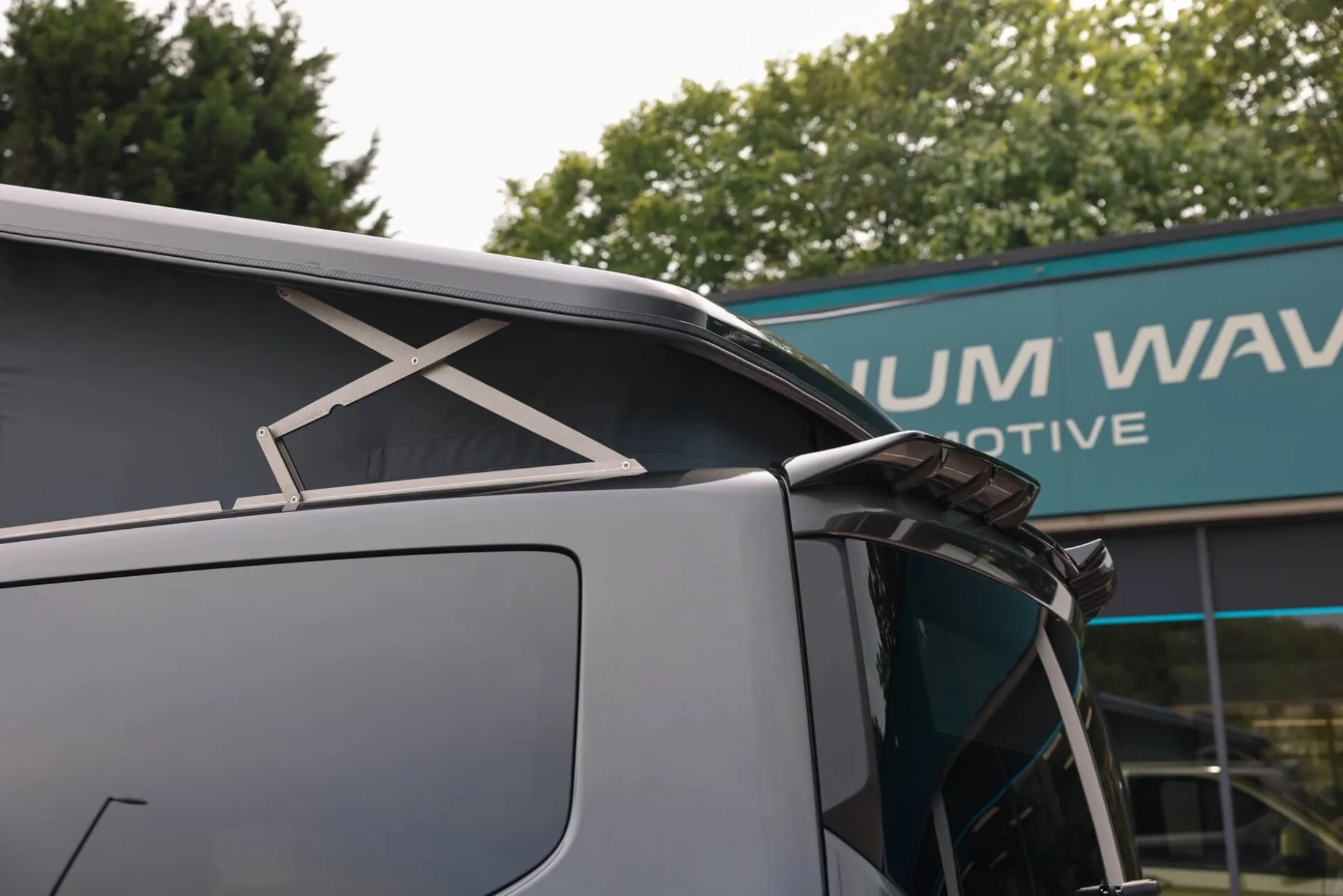
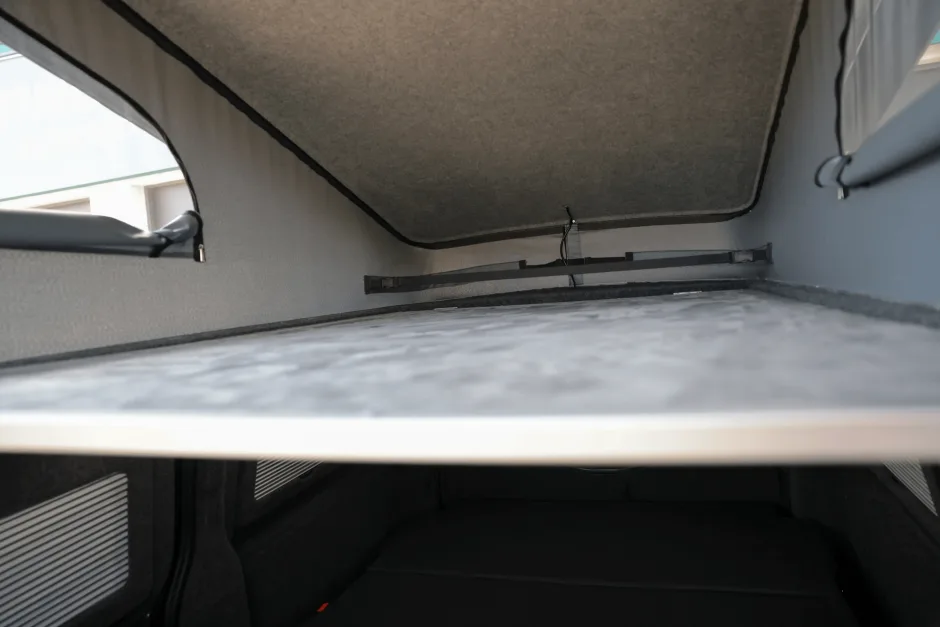
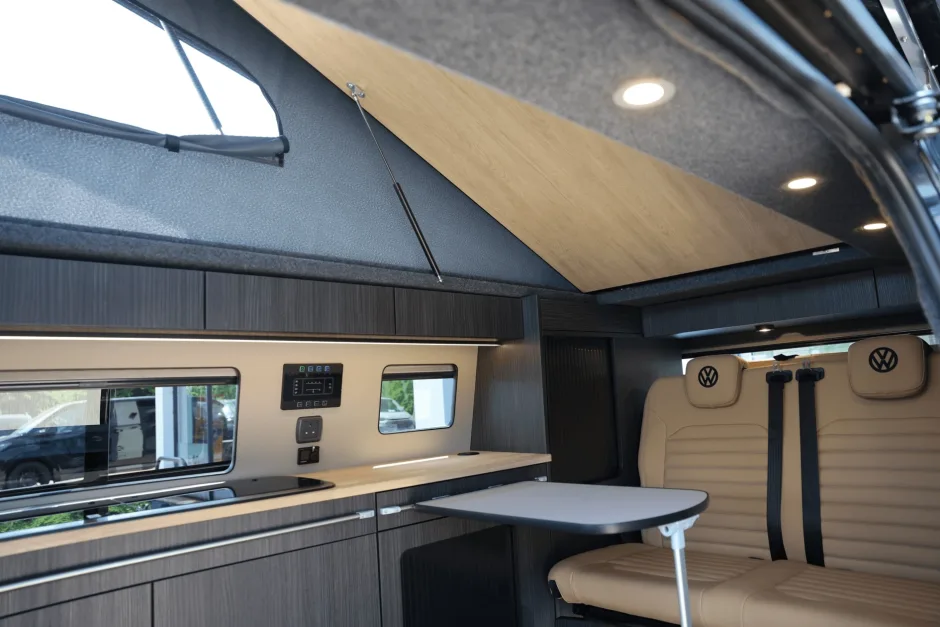
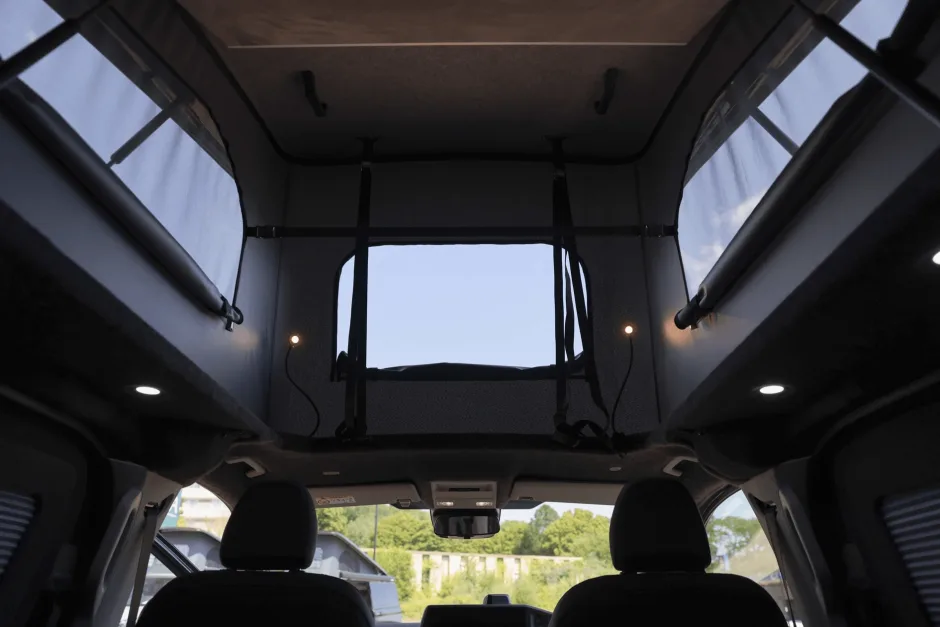
A pop top is a hinged roof in a campervan that can be extended to create more headspace. It can also be combined with an integrated bed board that creates an additional sleeping bunk, allowing you to comfortably sleep up to 4 adults in a compact campervan.
The sides of the pop top are commonly made from canvas or PVC, which keeps things lightweight and weather resistant.
Watch our video to find out more about pop top roofs:
What are the Benefits of a Pop Top for a Campervan?
Pop top roofs are one of the most common design features on a campervan as they help to create functional living quarters.
This helps to turn the van into a living space, and not just a sleeping space. It gives space to stand up comfortably, allowing inhabitants to move around, cook a meal or get changed without having to crouch.
Adding a bed board will also help to create a bunk suitable for 2 adults to sleep comfortably, turning a compact van into a 4 berth camper.
A pop top will also provide ventilation and fresh air. While weather-proof, the canvas sides are more breathable, so summer camping becomes much more comfortable.
What are the Disadvantages of a Pop Top Campervan?
The main disadvantages of a pop top campervan are the poor insulation, the potential for noise in high wind, and the reduction in storage.
First, the canvas sides of the pop top will lead to heat loss during the night. This makes your campervan experience feel much closer to a normal camping experience in a tent. You might also have to deal with the sound of canvas flapping in high wind. Noise from around your van will also be louder.
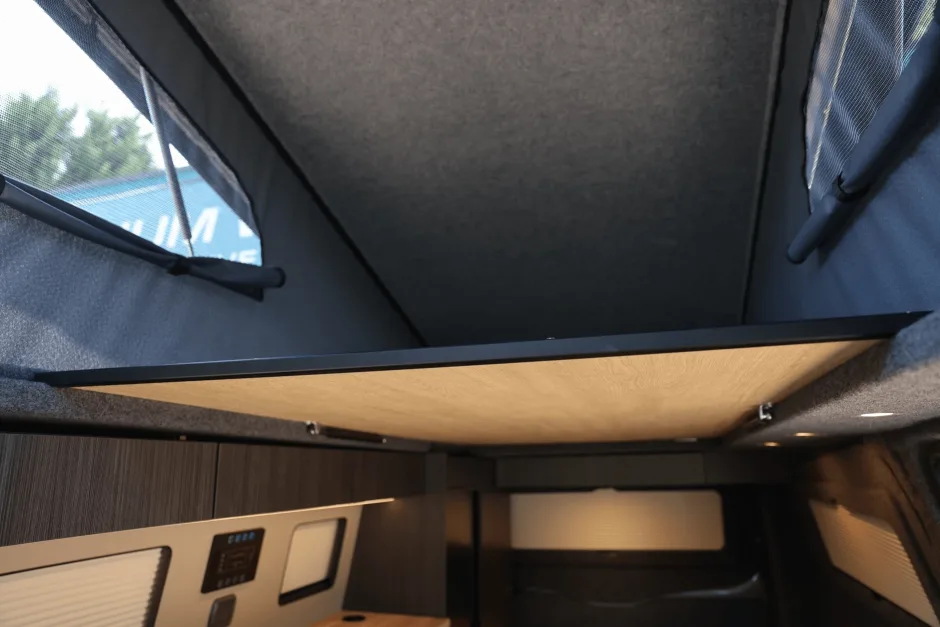
By installing a pop top, you’ll also lose out on top cabinets, which could provide a lot of additional storage. As you can see, adding a pop top to your campervan comes with some minor compromises.
Do Pop Top Campervans Leak?
Pop top roofs are designed to be weather-proof and watertight, but this is very much reliant on good maintenance. Annual servicing will help to extend the lifespan of your pop top and help to prevent water ingress.
How to Care for your Pop Top Roof
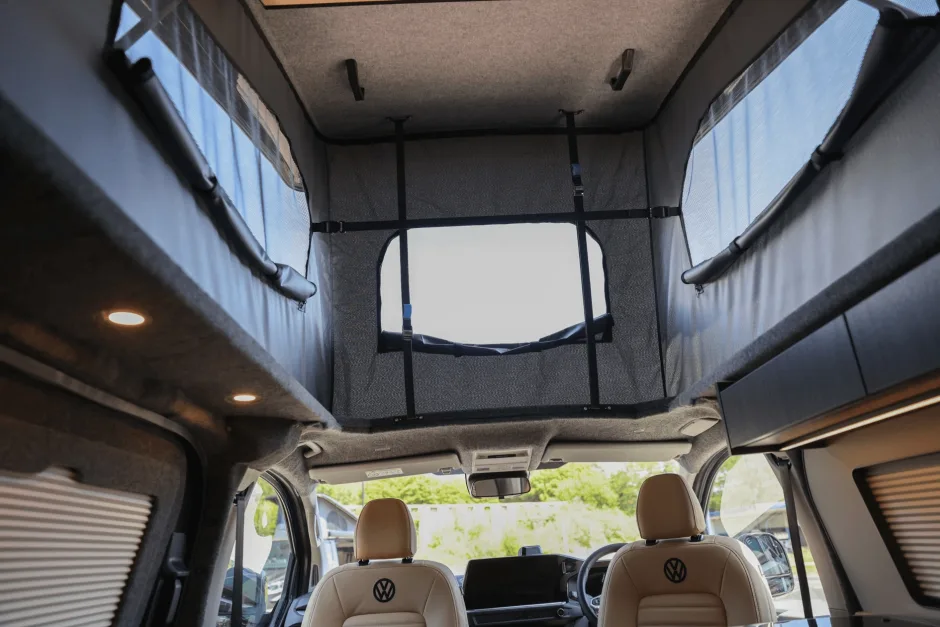
There are multiple components to the pop top that need special consideration. These are the hinges and the canvas sides. You might also have PVC windows set into the canvas sides.
The moving parts need to be regularly lubricated to prevent the pop top from getting stuck, which could lead to forcing it open, which could damage the canvas. The canvas also needs to be cleaned to remove dirt and debris built up. It will also benefit from waterproofing treatment to help keep water out.
The exterior shell should also be cleaned regularly to prevent build up of bird droppings, dirt and grime. Pressure washing should be avoided, as this could force water into the campervan.
Annual campervan servicing is also recommended, as this will include a habitation check. This specialist service will ensure the canvas pop top is properly maintained to help extend the life of your campervan and retain its resale value.
How Much Does a Campervan Pop Top Cost?
Our premium campervan pop tops with installation start at just £2995 + vat. If you already own a campervan and are thinking about adding a pop top to help increase the functional space inside your van, explore our campervan conversion packs. Alternatively, if you’re in the market for a campervan, consider our range of available stock with pop tops ready installed.
How to Get a Pop Top Roof Fitted to Your Campervan
The process of adding a pop top roof to a campervan is fairly straightforward, but we would always recommend professional installation. Conversions carried out by our team include a 12 month warranty, so you’ll have some peace of mind. DIY conversions will only offer a warranty on the parts, not the installation.
We might need to adjust the layout of your existing van by removing upper cabinets to make space for the pop top. We’ll start by removing the roof and then install a halo frame to restore rigidity. Next, we can add the pop top roof and seal the seams with a strong polyurethane bonding sealant.
Since this conversion task risks changing the structural integrity of your van, we don’t recommend it as a DIY task. Trusting this conversion to the professionals will ensure your van remains safe, road-worthy, watertight and secure.
Frequently Asked Questions
What are the pros and cons of owning a pop-top campervan versus a fixed-roof model?
The main advantage to consider is the added internal space. This will allow you to stand up inside your campervan, and when combined with a roof board, it could also add additional sleeping quarters for 2 more people.
If you’re buying your first campervan read our top tips.
How much wind can a campervan pop top withstand?
While most campervan pop tops can withstand winds of up to 40 to 50mph, comfort might start to decline at these levels. Popular advice is to lower the pop top when winds reach around 30mph, as this will make for a more peaceful night’s sleep, while also helping to avoid damage to the pop top.
Are pop-top caravans cold in winter?
A pop top camper will experience temperature drops similar to a normal tent. The difference is that you’ll be raised from the ground and can use an in-cabin heater to make the space warmer. The canvas and PVC design will allow heat to escape, so you might want to reconsider camping in winter, or keep the pop top closed during the colder months.
What is the lifespan of a pop-up camper?
A well-maintained unit can last for up to 20 or 25 years. The lifespan of the pop top camper will often depend on maintenance and how often it is used. We offer campervan servicing that will help to extend the life of your pop top.
Find out more about the anatomy of a campervan.
Approved by: William Boyle
Managing Director, Platinum Wave Automotive
Published: 22nd September 2026