


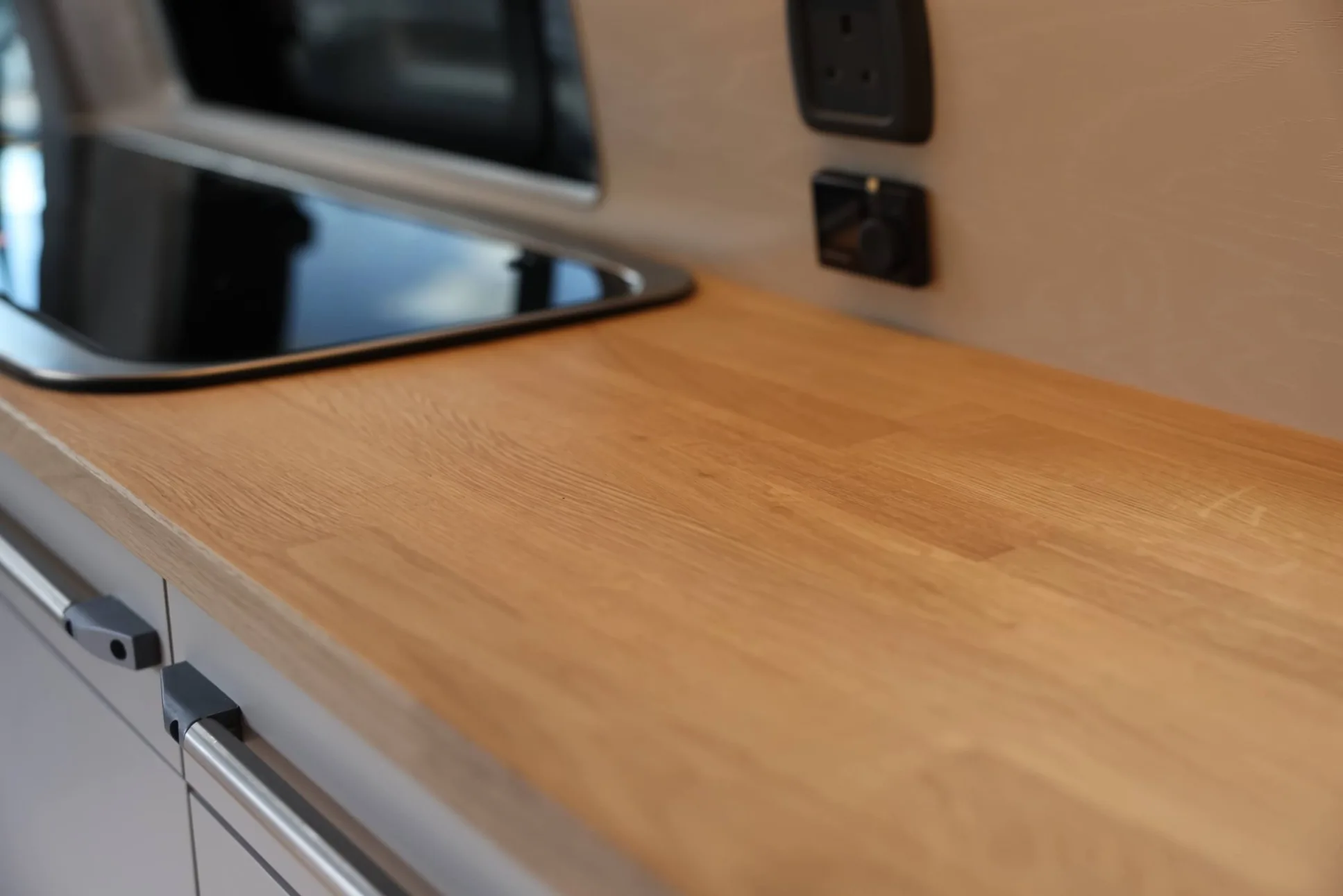
Adding a worktop to your campervan will create a dedicated space for food preparation and help to keep your van organised. Space-saving measures like integrated sinks and hobs will allow you to cook and wash-up inside your van, so you won’t be setting up a wobbly table everywhere you go.
As with all campervan additions, weight is everything. Every kilogram matters when it comes to adding creature comforts and gadgets to your setup, as this will impact your fuel efficiency and total load weight.
With this in mind, we’re taking a deep dive into campervan worktops, exploring the materials available and how to maximise your space while minimising weight.
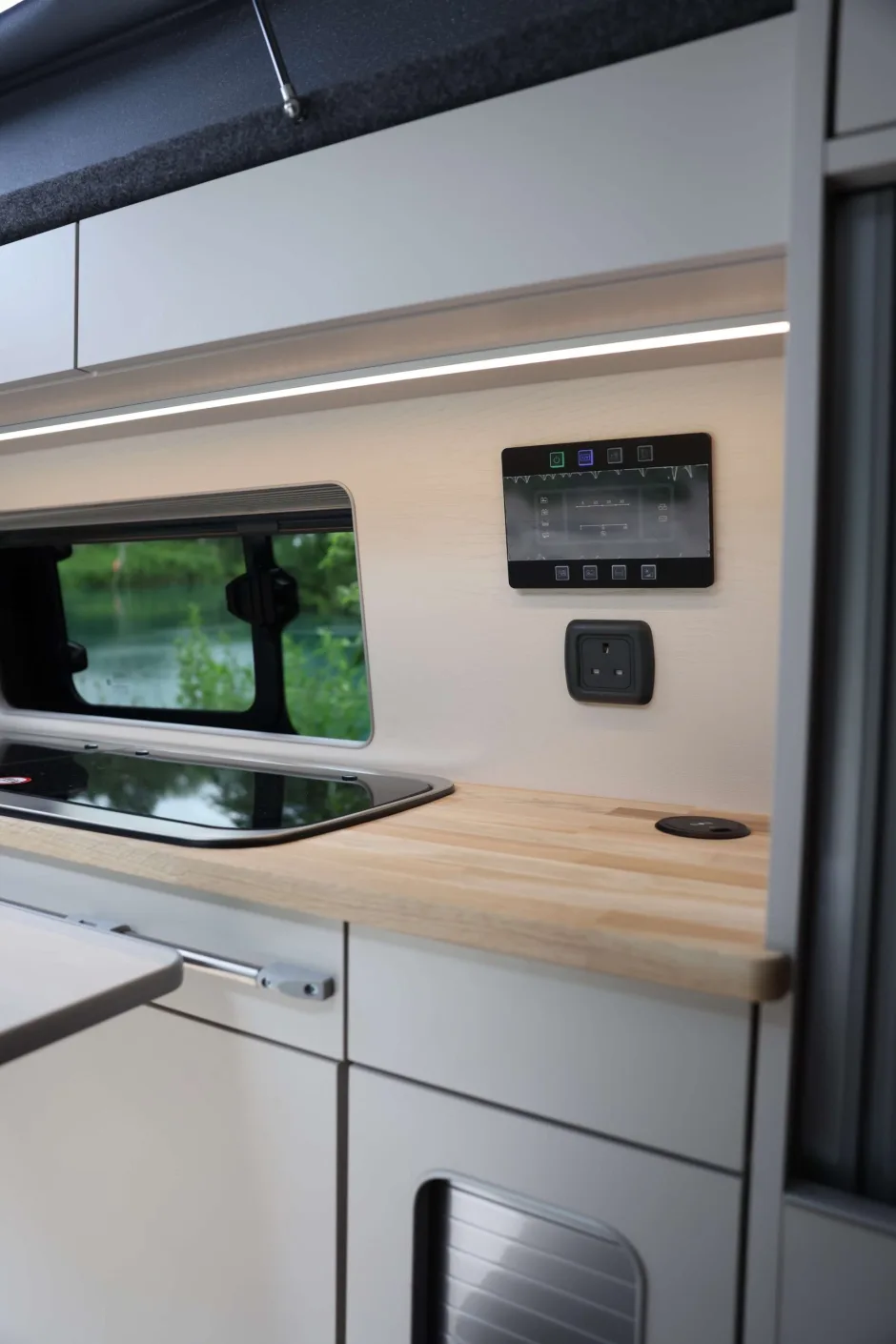
What are the Benefits of Fitting Worktops in a Campervan?
A fitted countertop in your campervan will give you space to cook meals on the road, it will also provide integrated storage for better organisation. A well-maintained campervan kitchen worktop can also help to improve the resale value of your van, as this is a very desirable feature for buyers.
It’s also an ideal opportunity to further customise the van to your tastes, resulting in a more personalised finish.
What can I use for a Campervan Worktop?
As mentioned above, every kilogram matters in a campervan conversion, but durability is also a consideration. A bespoke campervan kitchen worktop will naturally set you back more than a DIY version, and the difference in finish will be noticeable.
For a DIY-friendly build, consider cheap and lightweight MDF covered in a heavy duty contact vinyl wrap. Thinner sheets, around 12mm or 22mm will help to keep weight down. Be aware that these might be prone to warping if they become damp, which could make your worktop difficult to use. It may also be hard to get a professional, long-lasting finish when you do it yourself.
Custom campervan worktops are commonly made from laminated lightweight plywood, or a lightweight solid wood, such as bamboo or slim hardwoods like oak.
Another popular option for campervan builds is phenolic hexa plywood. This is a kind of plywood topped with a durable waterproof resin film with a distinctive hexagonal pattern. While less visually appealing, this is highly durable and offers non-slip benefits. You’re more likely to see this in a work van.
The Differences Between Campervan Worktop Materials
Choosing materials for your campervan isn’t like choosing a worktop for your kitchen. Campervan worktops also need to withstand excessive movement. Rattling along backroads could turn your worktops to sawdust if you opt for cheap chipboard and screws.
| Material | Pros | Cons | Cost |
|---|---|---|---|
| MDF + Vinyl | Budget option, customisable with vinyl wrapping. | Heavier option, prone to warping due to moisture, vinyl may peel over time. | Low (Most budget-friendly option) |
| Plywood/ Hexa | Highly durable with a non-slip coating, resistant to moisture, offers excellent strength to weight ratio, scratch resistant. | Higher cost, needs to be properly sealed and maintained to prevent warping, better suited to a work van. | Moderate to High (Premium specialised industrial grade) |
| Oak or Bamboo | Looks great, long-lasting, easily repairable and can be refinished. | Natural materials may expand and contract with seasonal humidity, needs to be properly sealed and maintained to prevent damage. | High (Premium price tier for solid materials) |
| Custom Wood and Resin | Can be completely waterproof, very durable, the most premium-looking option with high customisation. | Highest cost and the combination of materials could be heavier than other options. | Very High |
If you’re not sure what to use, during a conversion with Platinum Wave Automotive, chat to our team. We’ll talk you through the options and what will work best for you.
What is the Best Material for Campervan Worktops?
We love plywood for its strength to weight ratio and high customisation. We offer a range of finishes and colourways to allow you to create the perfect bespoke finish for your campervan. Our plywood is also completely heat and moisture resistant, so you can feel confident in its durability.
What is the Best Lightweight Worktop for Campervan?
If weight is your main consideration, your best option would be a thin plywood with heat and moisture resistant coating. You might also consider lightweight natural wood such as bamboo, although this might be prone to warping.
How Does a Campervan Worktop Maximise Space?
Good design choices will help to maximise space for cooking and organising. A few simple changes to the layout can help to increase functional cooking space, without sacrificing sleeping and living space.
Integrated sinks and hobs are great for keeping everything in its place, but simply adding covers on top will help to create more worktop when they aren’t in use.
We can also make use of drop-leaf and flip up extensions to increase functional work space. And finally, a slide out cutting board will allow you to prep food without damaging your worktops. Slot in prep trays can also maximise space for cooking, allowing you to whip up complex meals in a small space.
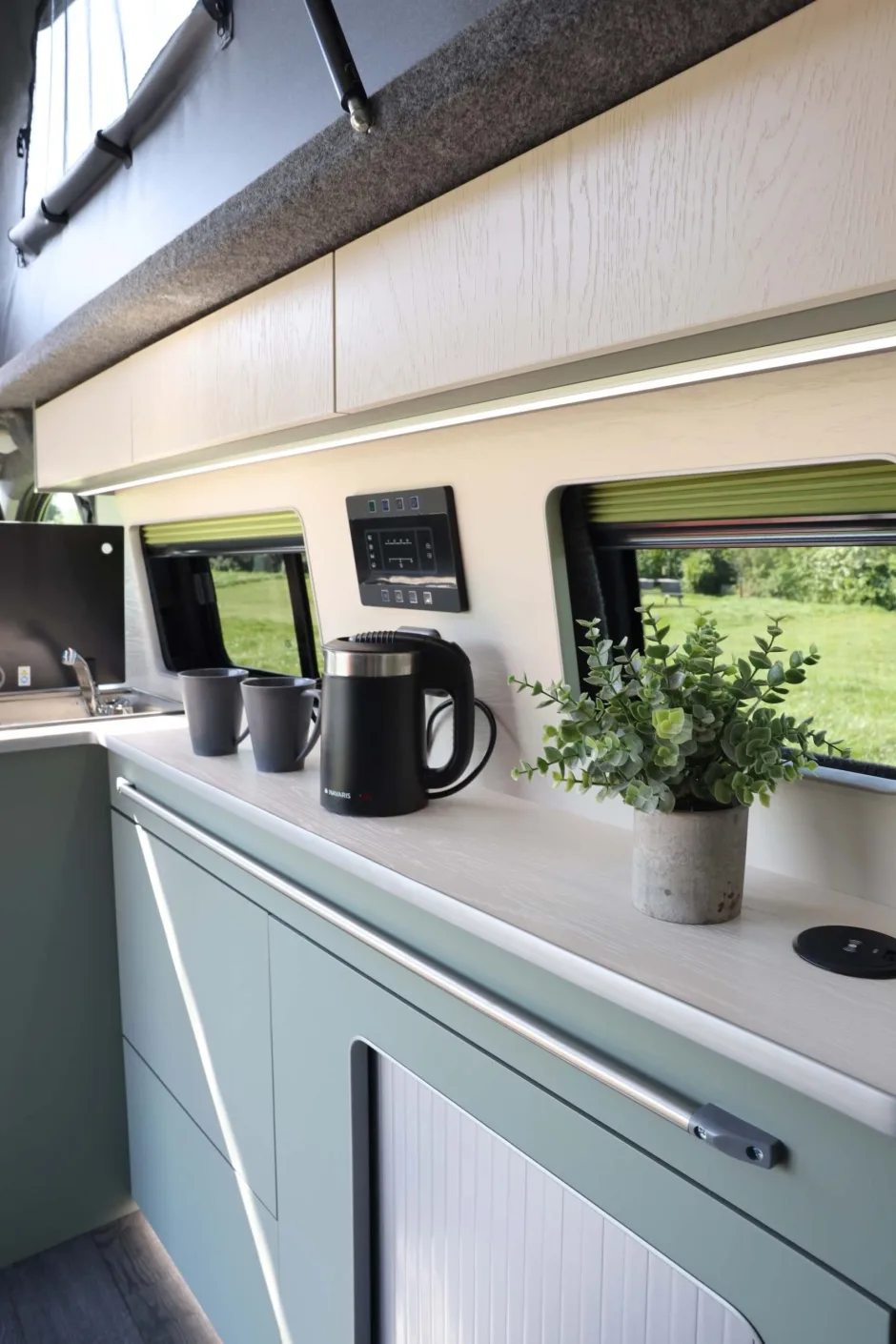
Protecting your Camper Worktop from Heat and Water Damage
Water damage to your counter tops can impact the resale value of your van as the surface may become warped. This can lead to spills and dangerous mishaps if you are placing hot liquids on a warped surface.
The best protection occurs at installation and simply involves choosing a heat and moisture resistant material. Bespoke worktops allow you to maximise your space in a way that a DIY approach cannot.
Can I Install a Worktop in my Own Camper?
It is certainly possible to install your own campervan worktop, and there are plenty of tutorials online showing you how to do this. A quick glance will reveal that it’s actually a lot more work than you might expect.
It’s also very difficult to achieve a fully customised build using a DIY method. If you’re on a strict budget and aren’t too concerned about the resale value of your van, a modular build offers the perfect compromise.
For a premium finish that will help to boost the value of your van, consider a custom build with a camper worktop from Platinum Wave Automotive.
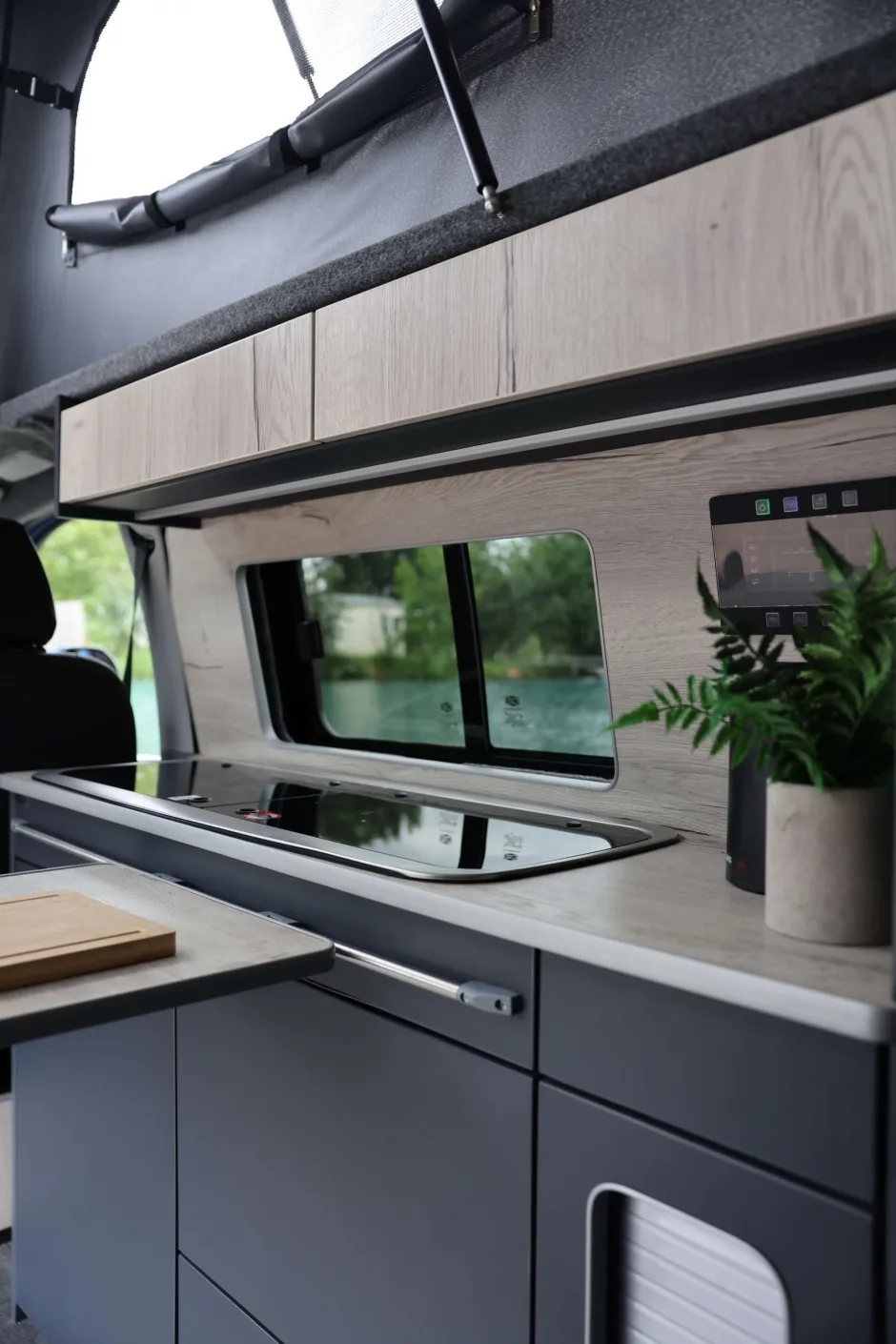
Campervan Worktops with Platinum Wave Automotive
Our laminated worktops will coordinate perfectly with your campervan specification. All units are made from lightweight with a heat and moisture resistant coating. Choose from a wide range of finishes, including wood and stone-style finishes.
Get in touch with our sales team to start planning your campervan kitchen conversion. We can install new worktops, or replace ageing worktops or DIY attempts.
Frequently Asked Questions
What are the Differences Between Home and Campervan Countertops?
The main difference between residential and camper worktops is the weight. While you might opt for natural stone and hardwood in your home, these would be unsuitable for a campervan.
What is a Good Lightweight Worktop for a Campervan?
Worktops for campervans should be constructed from lightweight but durable materials like plywood. This will stand up well to rattle tests, so you can be confident it will remain structurally sound, even as you tumble along remote country roads.
Why Shouldn’t I use Standard Quartz, Granite, or Marble in a Campervan?
Quartz, granite and marble might look the part, but they are far too heavy for a campervan kitchen. To achieve this look, we recommend a coated plywood worktop.
Can I Use Real Wood (butcher block) in a Campervan?
A butcher’s block might look great in your kitchen, but the bulky wood will weigh down your campervan. We recommend combining a plywood worktop with a pull-out chopping board in a butcher’s block style. This offers the best of both worlds.
Approved by: William Boyle
Managing Director, Platinum Wave Automotive
Published: 4th November 2026